A Brief History of Revell Plastic Model Kits

Return to kits for sale

By Alan Bussie

I would like to thank John Burns and numerous KCCers. Without them, it would have been impossible to compile this information.

This article was updated on 27 May 2025. –ab

In the early 1940s, Lou Glaser, an entrepreneur from California, established an injection molding company called Precision Specialties, which provided contract services to other manufacturers. In the early 1950s, the design firm Gowland and Gowland created the well-known 1/32 scale “Highway Pioneers” line, consisting of 30 cars that were the first mass-produced plastic automotive kits. Glaser marketed these kits for 69 cents at Woolworth Dime Stores, and they sold successfully. This success led Glaser to conclude that Revell should focus on selling children’s toys, particularly plastic model kits.

The first mold created by Revell was the 1953 USS Missouri, which was initially released in a narrow box.

rev-ps-missnb-g.JPG


missour-molds.JPG

The first three aircraft kits were released quickly in one-piece boxes. The F-94C, F7U-1, and F9F-6 were molded Continue reading “A Brief History of Revell Plastic Model Kits”

Aurora 1/48 505-69 Kaman HOK-1 Egg Beater Model Kit Review

by: Frederick Boucher [ JPTRR ] (photos and kit history by Alan Bussie)

Introduction

Welcome to the first review of the late-great Aurora Model Company range of 1/48 helicopters! Kaman HOK-1 “Egg Beater” was kitted in 1956 as kit Nr. 505-69; “-69” was the MSRP of 69¢, and one got a cool model for that. We’ll judge this venerable kit today.

Special thanks to Alan Bussie of Old Model Kits for his contribution of kit release notes, as well as making this model available for this review.

Kaman HH-43B Huskie/HOK-1

Aurora’s Kaman Model K-600 (Kaman Aircraft’s designation) model is of a unique helicopter flown by the United State’s Air Force, Marines, and Navy. Decals are included for all three of the services, as well as for the US Army, for which I can find no history of. Although Aurora marketed it as the USMC HOK-1, as it was essentially the same aircraft (Except the HOK-1 was powered by the R-1340-52 radial piston engine engine while USAFM’s Husky had a turbine engine), I offer USAFM’s history of the machine.
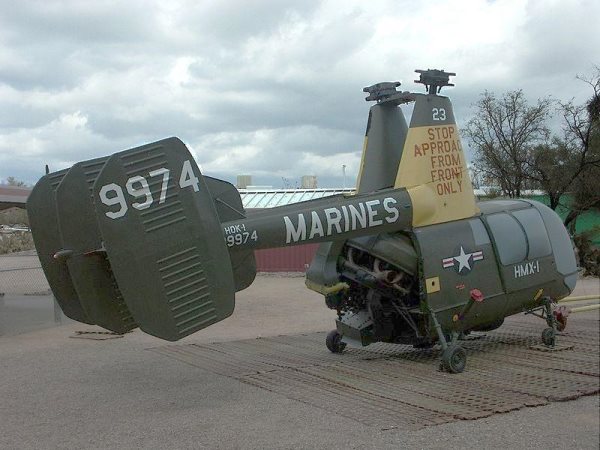
Pima Museum Display

Continue reading “Aurora 1/48 505-69 Kaman HOK-1 Egg Beater Model Kit Review”
The 1/350 SS Normandie Modeling Project

By Alan Bussie & Ken Friend

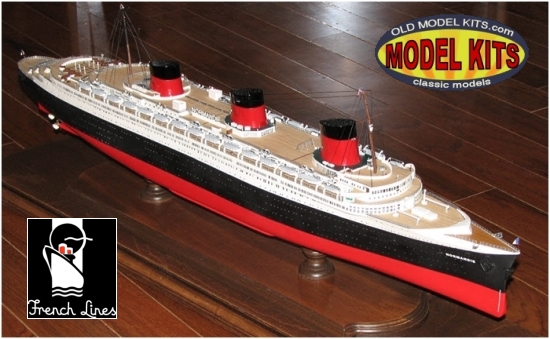
We are happy to announce that Oldmodelkits.com has received exclusive license from the French Line to produce and sell the 1/350 SS Normandie Ocean Liner model kit!  The first batch are ready to ship.  These are limited run kits in resin with photoetched details.

normanide-built-550-2.jpg

Photo of the first production model, built by Ken Friend 

If you have ever wondered what goes into making a model, then please read on!  If you plan on buying a 1/350 Normandie, please continue so you will know what went into your personal model.  

Alan:  In 2007 Ken Friend and I decided to make a model kit.  It was not a sudden decision, but the result of two life-long dreams.  I had been seriously investigating making a number of unique models but I lacked certain necessary skills.  Ken had wanted to produce a model also and did possess the numerous skills that I lacked- IPMS National Award Winner, CAD expert, early 3D printing engineer for GM and a mold maker/caster.

Continue reading “The 1/350 SS Normandie Modeling Project”

Aurora’s Boeing Bomarc IM-99 (CIM-10B) With Launcher Kit Review

By Fred Boucher

with kit history by Alan Bussie 

Introduction

In the chill of the Cold War a golden age of aviation inspired many new aerospace vehicles, including surface-to-air missiles.  One was the supersonic, long-range anti-aircraft Bomarc missile.  The USAF originally categorized it as a fighter aircraft and designated it F-99.  Later they re-designating it IM-99A and IM-99B after 1955, and finally CIM-10 after the McNamara Sept. 1962 dumb-down.  

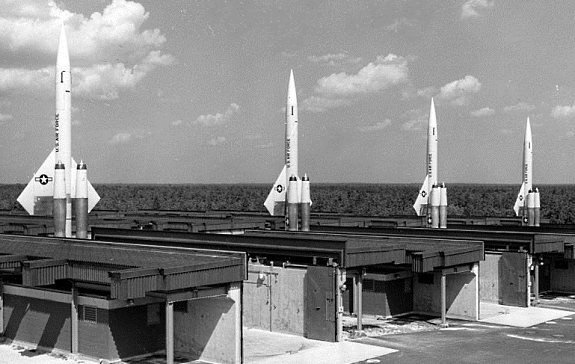
cim-10_bomarc_missile_battery.jpg

Bomarc Base #1 with missiles in launch position (courtesy Wikipedia) 

Most of these kits came out before I was born so perhaps it isn’t so strange that I never saw them at my hometown hobby outlets.  In fact, I was not even aware that many existed until the advent of online sites.

Kit History 

Aurora wasted little time detecting and acquiring information to cut tooling and produce injection molded models of those contemporary subjects.   Their goal was to be to market first with the latest – and they were!  The Boeing “Bomarc IM-99 Intercepter- [sic] Missile With Mobile Launching Platform- Newest Weapon for America’s Defense” was released in 1958.  Aurora scaled it to 1/48.  It was packaged in an Aurora standard “long box” carton, a sturdy cardboard conventional lid-tray design.  Dramatic box art shows a Bomarc searing skyward from its launcher into the atmosphere to smite commie inbounds.  In an effort to maximize mold utilization, Aurora issued this model as two kits (just like the Regulus II).  377-198, the subject of this review, was the Bomarc with a working launching.  At nearly double the price, this kit featured completely new box artwork, decals and instructions.  The traditional Aurora stand was not included, presumably because the launcher doubles as one.  

Continue reading “Aurora’s Boeing Bomarc IM-99 (CIM-10B) With Launcher Kit Review”

History of the Hawk “Weird-Ohs” Plastic Model Kits

Return to kits for sale

By Bill Campbell -Edited by Alan Bussie Google+ profile

When he provided me the information for his biography and Hawk Model Company, Bill was kind enough to write a history of the phenomenal Weird-Ohs model kits that he developed. – AB

After reviewing some of the dangling questions voiced on the internet by people wanting to close the circle of the Weird-Ohs, I decided to write this article. I will do my best to finally resolve the Who, What and Why questions that you have articulated on your electronic cyber queries.

daddy.jpg

“Daddy”, one of the original Weird-Oh figures (Hawk Reissue)

The Weird-Ohs were produced from 1963 forward by the Hawk Model Company in Chicago, IL. Hawk is perhaps the oldest model company in the USA, dating back to 1928. My relationship with Hawk was a close one, as I was usually busy producing box artwork for them. For more information on how I met up with Hawk, please read the biography located on this website. Now I’ll head into what you really wanted to know – about the Weird-Ohs. Continue reading “History of the Hawk “Weird-Ohs” Plastic Model Kits”

Aurora Plastic Model Kits – A Brief History

Return to kits for sale

By Alan Bussie Google+ profile

Many thanks to John Burns, Tom Graham and the innumerable number of collectors who have helped to compile this information over the years. Without your tireless attention to detail, this would be impossible.

Aurora was one of the most prolific names in American Modeling from 1952 to 1977. The line was very diverse and included military and civil aircraft, ships, tanks, missiles, figures (monster and many others), science fiction, automotive, animals, guns, totem poles, HO train items, electronic kits, “Coppersmith” sets, prehistoric scenes and more.

The Early Years – The Brooklyn Era
In 1950, Abe Shikes and Joseph Giammarino created Aurora as an injection molding job-shop. Injection molding was booming in post-war American and business went well. In 1952, they hired a salesman named John Cuomo. The three produced many toys but quickly realized that plastic model kits were the wave of the future, so they banked Aurora’s future on it.

Kit production started in the Brooklyn Plant in late 1952. These kits were in one-piece flip-top boxes and carried the circular logo and the “U-Ma-Kit” slogan. The first two kits were the 1/48 F9F Panther Jet (kit #22) and 1/48 Lockheed F-90A (kit #33).  These first two kits carried no landing gear or missiles and had minimal rivet and panel line detail. Box art was simple and used two colors. There was no price extension after the kit number.

First Issue Aurora F-90A #33

Issues exist with the instructions printed on the inside of the box and with the instructions printed on a separate piece of paper.

If you have the early Hawk releases of the F9F or F-90, Continue reading “Aurora Plastic Model Kits – A Brief History”

Save Those Old or Yellowing Plastic Model Decals

Return to kits for sale

by Ken Friend

Nothing is more discouraging than watching decals yellow with time after they have been applied to one of your favorite models. Well, maybe there is something more discouraging; spending your valuable allowance on an older model kit only to find the decals are almost useless from discoloration. The following article might help. Discolored decals can be used to generate new decals that stand a much better chance of maintaining their true colors and clarity.

The example below shows the original decal sheet from an AMT XB-70 kit released in 1995. The clear film between colored segments is discolored. Obviously, this will show dramatically Continue reading “Save Those Old or Yellowing Plastic Model Decals”